Humor in the Times of War

Introduction
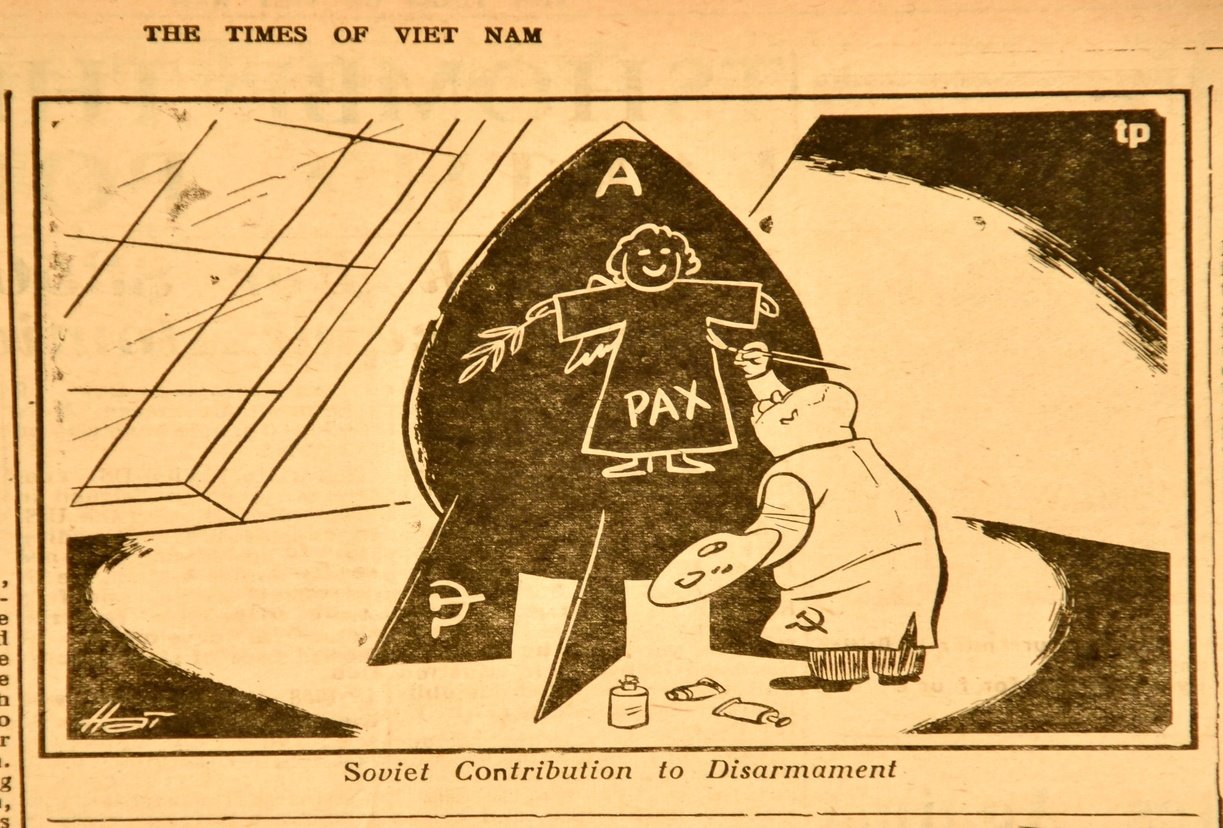
Published in The Times of Viet Nam during the Cold War era, this political cartoon reflects the newspaper's anti-communist editorial stance while capturing the ideological tensions that shaped twentieth-century global politics. Through satire and symbolism, the illustration presents a visual critique of Soviet disarmament efforts, transforming a contemporary political event into a powerful historical document. Today, preserved as part of Conferro's collection, it stands as a rare example of wartime political humour and journalistic expression.
Historical Context
Emerging from South Vietnam during one of the most turbulent periods in modern history, The Times of Viet Nam served as a prominent English-language newspaper aligned with the anti-communist government. Throughout the Vietnam War, its editorial cartoons documented not only regional conflict but also the wider ideological struggle between the communist bloc and the Western alliance. These illustrations provide valuable insight into how global events were interpreted through the lens of South Vietnamese media.
Artwork & Symbolism
Titled "Humor in the Times of War," the cartoon employs irony to question the sincerity of Soviet peace initiatives. A painter is shown creating an image labelled "PAX" (Latin for peace) within a dark silhouette marked by the hammer and sickle, symbolising the Soviet Union. Rather than portraying peace as genuine, the cartoon suggests that it is being carefully manufactured as propaganda. The contrast between the cheerful figure representing peace and the imposing communist backdrop reinforces the newspaper's scepticism toward Soviet diplomatic messaging, making the illustration both visually striking and politically charged.
Political Significance
Like many cartoons published in The Times of Viet Nam, this work extends beyond humour to function as political commentary. It reflects the ideological divide of the Cold War, portraying communist powers—particularly the Soviet Union—as projecting an image of peace while simultaneously pursuing expansionist ambitions. Such cartoons played an important role in shaping public opinion, translating complex geopolitical issues into accessible visual narratives that resonated with readers during a time of conflict.
Historical Importance
Beyond its original publication, the cartoon has acquired lasting historical value as a primary visual source from the Vietnam War era. It offers contemporary audiences a rare perspective on Cold War propaganda, media, and public discourse, preserving the political atmosphere of the period through satire. As part of Conferro's curated collection, it contributes to a broader understanding of how newspapers documented and interpreted world events through the language of illustration.
Legacy
More than six decades after its publication, this political cartoon continues to resonate as an important artefact of twentieth-century history. It represents the enduring power of editorial illustration to influence opinion, document conflict, and preserve ideological narratives. Today, it is appreciated not only for its artistic wit but also for its significance as a historical record of the Cold War and the Vietnam War, offering collectors, historians, and researchers a unique glimpse into an era defined by political rivalry and visual storytelling.