Qing Dynasty Rosewood Jewellery Boxes

Introduction
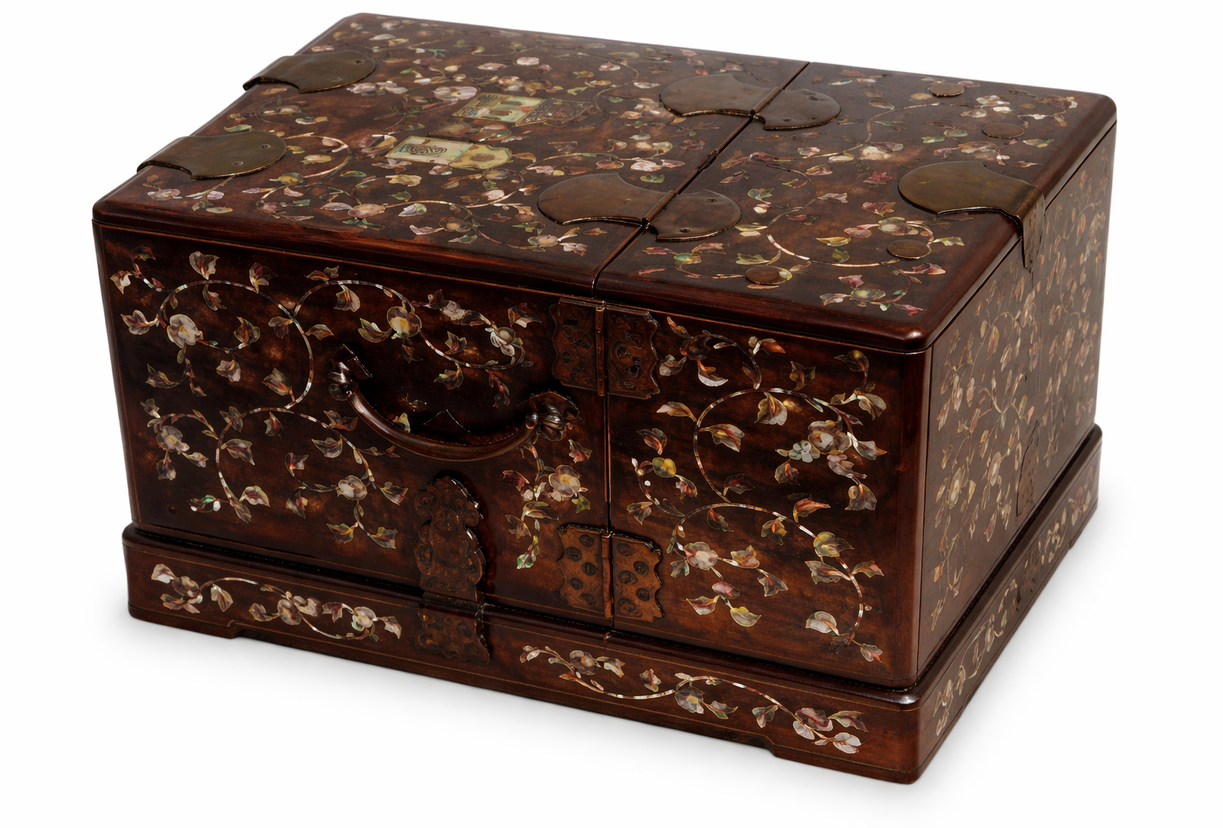
Elegant in form and exceptional in craftsmanship, this rare pair of Qing Dynasty Rosewood Jewellery Boxes embodies the refinement of nineteenth-century Chinese decorative arts. Adorned with intricate mother-of-pearl inlay and meticulously handcrafted using traditional joinery techniques, these boxes represent the artistry and cultural sophistication of the Qing period. Preserved as a matching pair, they stand today as remarkable examples of China's rich artisanal heritage.
Historical Context
Commissioned around 1860, following the conclusion of the Second Opium War, these jewellery boxes were created during the reign of the Qing Dynasty for a noble Manchu family. Such boxes were traditionally associated with marriage ceremonies, coming-of-age celebrations, and the safekeeping of precious ornaments including bangles, rings, necklaces, hairpins, and jade accessories. The tradition of crafting rosewood jewellery boxes originated during the Ming Dynasty and flourished under Qing patronage, becoming symbols of prosperity, refinement, and familial prestige.
Craftsmanship & Design
Handcrafted from richly polished rosewood, the boxes showcase exquisite mother-of-pearl and jade inlay arranged in elegant floral scrolls across every visible surface. Constructed using the time-honoured mortise-and-tenon joinery technique without the reliance on nails, they exemplify the precision and durability of traditional Chinese woodworking. Decorative brass mounts and finely balanced proportions further enhance their aesthetic appeal, reflecting the exceptional level of craftsmanship achieved by Qing artisans.
Cultural Significance
Beyond their practical function, these jewellery boxes carried deep symbolic meaning within Chinese culture. Their floral inlays and ornamental motifs were designed to convey wishes of prosperity, harmony, longevity, and good fortune. The survival of this perfectly matched pair is particularly rare, as many comparable objects were destroyed during the Cultural Revolution of the 1960s, when ornate antiques were viewed as symbols of bourgeois wealth and discarded or damaged.
Historical Importance
As surviving examples of Qing Dynasty decorative arts, these jewellery boxes offer valuable insight into the craftsmanship, customs, and material culture of imperial China. Their rarity as a complete pair, combined with their exceptional state of preservation, makes them significant not only as functional objects but also as important historical artefacts that document the artistic excellence of nineteenth-century Chinese furniture making.
Legacy
Today, this extraordinary pair is appreciated for its historical authenticity, refined artistry, and enduring cultural value. Combining elegant design with centuries-old woodworking traditions, the boxes continue to captivate collectors, museums, and scholars of Asian decorative arts. As part of a carefully curated collection, they remain enduring symbols of Qing Dynasty craftsmanship and China's rich artistic legacy.